In daily practice, one of the greatest challenges in restorative dentistry is achieving composite restorations that combine excellent marginal adaptation, natural aesthetics and high durability. It is not just a matter of reconstructing a tooth, but of achieving a result that functions correctly in the long term and is, moreover, virtually imperceptible.
However, many practitioners face difficulties when handling composite: materials that are too rigid, a lack of adaptation in critical areas, or the need to spend more time than desired on modelling and adjustment. The use of heated composite has become an increasingly popular solution. As demonstrated by Dr Ida Louise Line’s clinical case, this technique not only facilitates clinical work but also significantly improves the final results.
What is a composite heater and what is it used for?
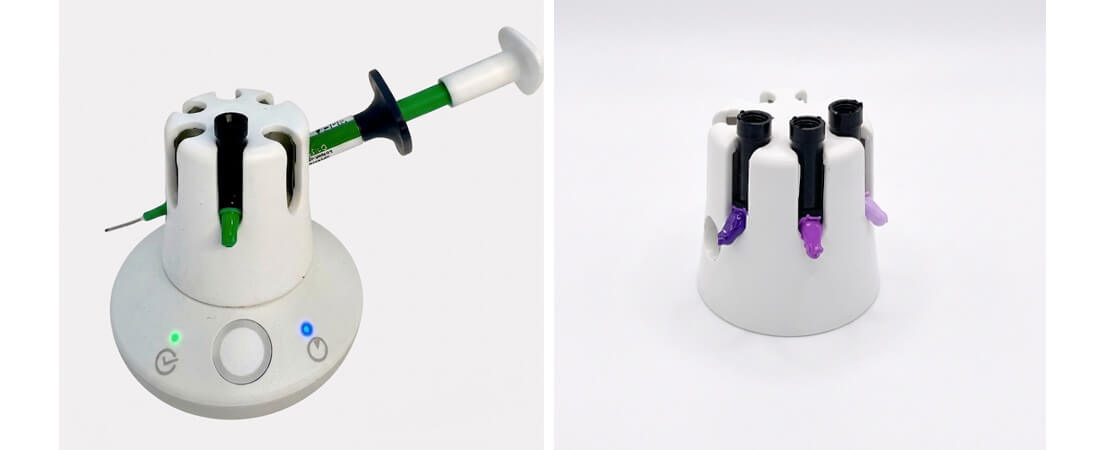
A composite heater, such as the Solventum Filtek, is a device designed to raise the temperature of the restorative material prior to application. This controlled increase in temperature temporarily alters the viscosity of the composite, making it more fluid and easier to handle.
From a clinical perspective, this translates into an immediate improvement in the way the material behaves on the tooth. A more fluid composite adapts more easily to both enamel and dentine as well as to other restorative materials, which is particularly useful in repairs or in hard-to-reach areas.
Furthermore, the device is designed to integrate easily into the clinical workflow:
- After a brief preheating period of approximately two minutes, the capsules are ready for use.
- It offers the capacity to heat several capsules and a syringe of liquid composite at the same time, providing versatility for different types of procedures.
- Its design includes a removable top section that can be placed directly on the chair table, allowing the dentist to work more comfortably and without interruptions.
Real benefits of heated composite
The main effect of heating the composite is the increase in its flowability. This seemingly simple characteristic has very significant clinical implications. As it flows better, the material bonds more closely to the substrate, making it easier to achieve more precise and continuous margins. This aspect is key to preventing problems such as microleakage, marginal discolouration or the development of secondary caries.
Another important aspect is the reduction in treatment time. As less manipulation is required to achieve a good fit, the dentist can work more quickly and efficiently. This not only improves the dentist’s experience, but also that of the patient, by reducing the duration of treatment.
Furthermore, when the composite bonds better between layers, it minimises the occurrence of internal porosity. This has a direct impact on the quality of the final result, facilitating polishing and improving the aesthetics of the restoration.
It is worth noting that this effect is particularly noticeable in materials with a higher initial consistency. Products such as Filtek One Bulk Fill, Filtek Universal, Filtek Easy Match Universal or Filtek Supreme XTE Universal experience a significant improvement in workability when heated, which broadens their clinical possibilities.
Clinical case: Anterior aesthetic restoration with heated composite (Dr Ida Louise Line)
Dr Ida Louise Line, a dentist with experience in general dentistry and a special focus on patients with dental anxiety, presents a clinical case that clearly illustrates the potential of heated composite in aesthetic anterior restorations.
In this case, Filtek Supreme XTE Universal Restorative, heated, was used, applying a layering technique with different materials (dentin, body and enamel) to achieve a highly natural result.
The patient’s initial situation
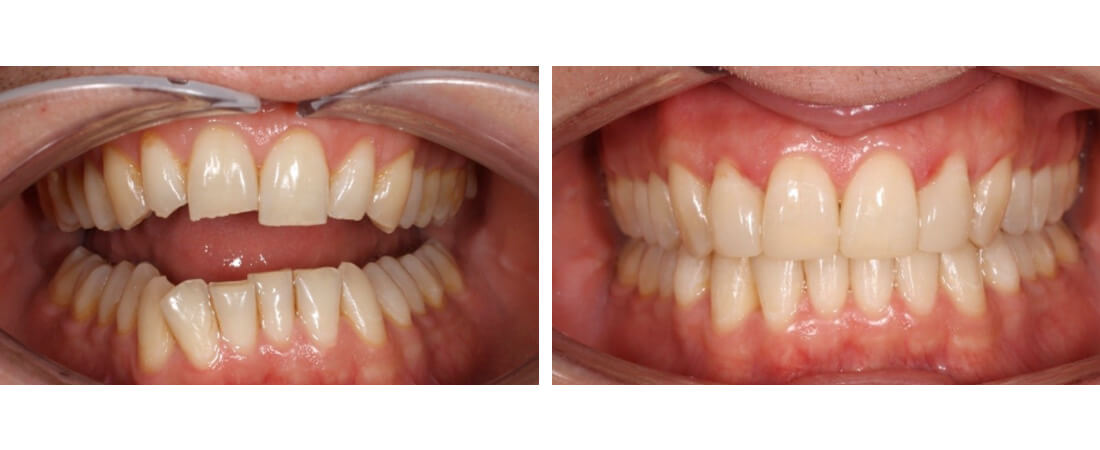
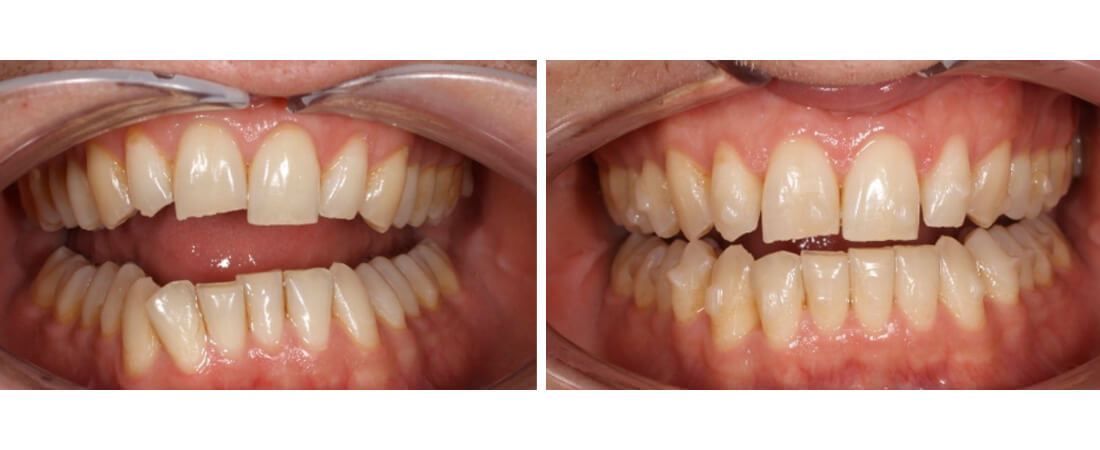
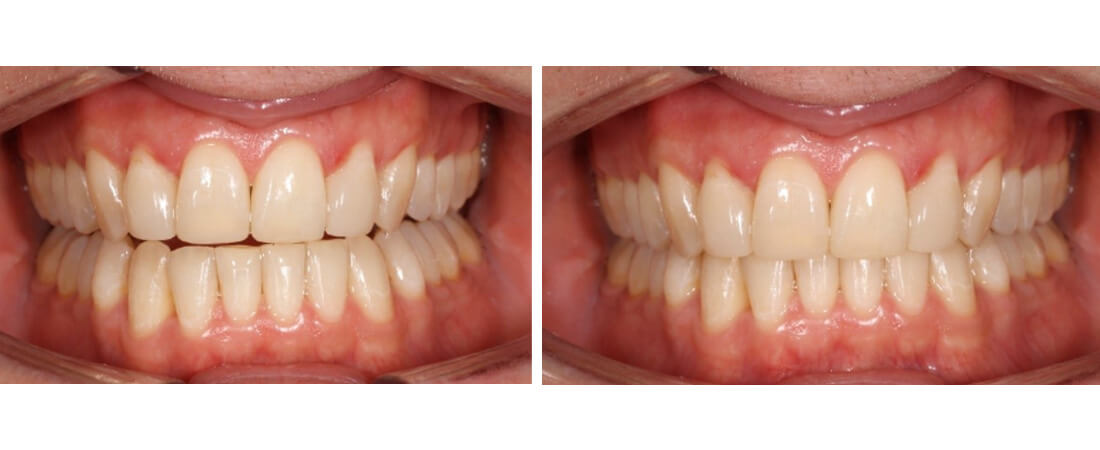
The patient attended the consultation with a specific aesthetic request: to improve the shape of their anterior teeth whilst maintaining their natural colour, as they did not wish to undergo a whitening treatment.
Clinically, he presented with narrow upper lateral incisors, which affected the harmony of his smile. Furthermore, dental wear was observed, mainly due to attrition, as well as crowding in the mandibular anterior region.
Before carrying out the composite restoration, an interdisciplinary approach was adopted. Orthodontic treatment was carried out using 26 aligners with the aim of repositioning the teeth and creating the space required for proper restoration. This preliminary step improved the relationship between the dental arches and created the ideal conditions for the restorative treatment
Clinical procedure
Once the orthodontic phase was complete, aesthetic restoration was carried out using heated composite.
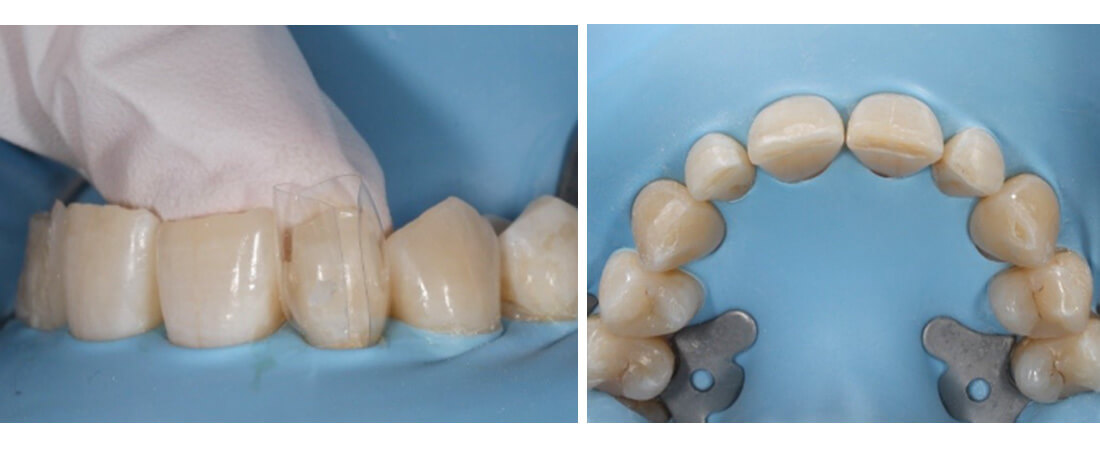
The procedure began with thorough preparation of the operating field. Rubber dam isolation was used to ensure a dry and controlled environment. Subsequently, 30-micron aluminium oxide sandblasting was performed, followed by etching with phosphoric acid. Bonding was carried out using the adhesive Solventum Scotchbond Universal Plus, ensuring a solid foundation for the restoration.
Bioclear matrices were used for the reconstruction of the lateral incisors, allowing the anatomy to be correctly defined. The technique involved applying a thin layer of flowable composite to the base, particularly in the gingival area and in contact with the adjacent teeth, and subsequently reconstructing the mesial and distal areas using heated composite. The greater fluidity of the material proved particularly advantageous. It allowed for precise adaptation to the substrate and facilitated modelling without the need for excessive manipulation.
During the build-up, modelling fluid was used to prevent the composite from adhering to the instruments, and glycerine was applied prior to final polymerisation to prevent oxygen inhibition. This combination of techniques enabled both the structure and the finish of the restoration to be optimised.
Results obtained
The post-operative images, taken the day after treatment, show a highly satisfactory result. The teeth, now rehydrated, regained their natural colour and exhibited excellent aesthetic integration. The shape and proportions of the lateral incisors were improved, achieving a more harmonious smile without altering the original shade of the teeth. Furthermore, the quality of the margins and the adaptation of the composite demonstrate the advantages of using heated material.
The final result demonstrates that this technique not only simplifies the procedure, but also helps to achieve more precise and aesthetically superior restorations.
The use of heated composite represents a practical advancement in restorative dentistry. It is not merely an improvement in the handling of the material, but a tool that directly impacts the quality of the final result.
As demonstrated by the clinical case of Dr Ida Louise Line, this technique allows for greater precision, optimises clinical time and results in more aesthetic and durable restorations.
We hope you found this post useful. To stay up to date, follow us on social media, where we’ll be sharing more articles, useful information, offers and promotions from the dental sector. We look forward to seeing you there!