Sterilisation is one of the most important processes in a dental clinic, as it ensures the safety of patients and healthcare personnel. Dental procedures involve the use of instruments that come into contact with biological fluids, tissues and surfaces that may be contaminated with pathogenic microorganisms. Without proper sterilisation, there is a risk of cross-infection and transmission of diseases such as hepatitis B, hepatitis C or HIV.
To ensure that the instruments used in the clinic are safe, it is essential to apply appropriate sterilisation protocols and, above all, to have controls in place to verify their effectiveness. These controls ensure that the process has been carried out optimally and that the necessary parameters for eliminating microorganisms have been achieved. Here we explain what sterilisation controls are, their importance in dentistry, their advantages and disadvantages, as well as the different types of controls used in clinical practice.
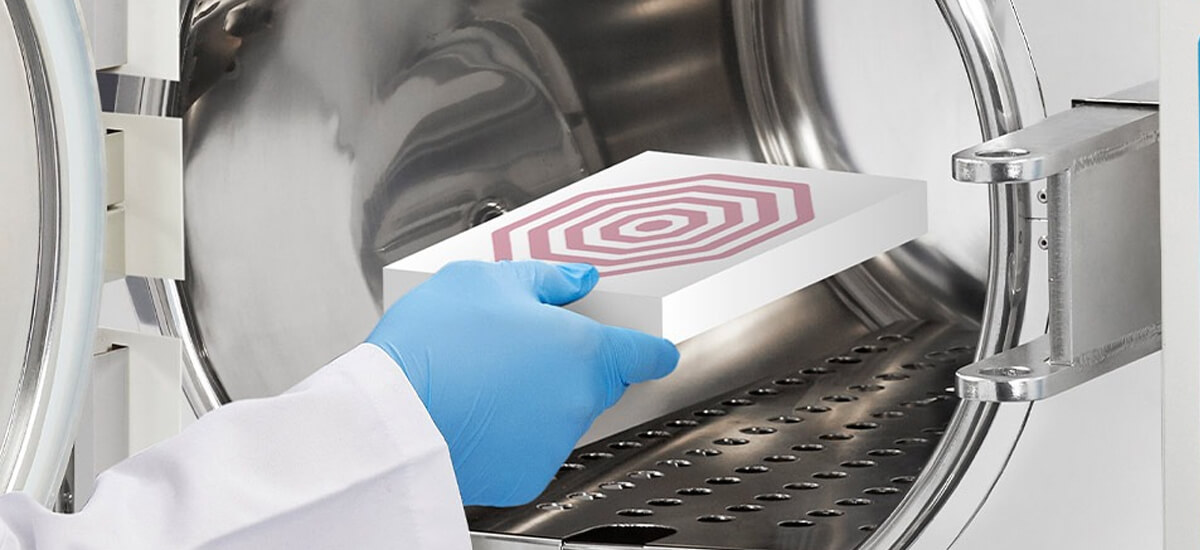
What are sterilisation controls?
Sterilisation controls are procedures designed to verify that the sterilisation process has been carried out correctly and that instruments and materials are completely free of microorganisms. These checks ensure that key process parameters, such as temperature, pressure, exposure time and penetration of the sterilising agent, are effectively met, reducing the risk of cross-infection in the dental clinic.
To understand their importance, it is essential to be familiar with the different sterilisation methods used in dentistry. Each method requires specific controls to assess its effectiveness:
- Moist heat sterilisation (steam autoclave): This is the most commonly used method in dental clinics. It involves applying steam at high pressure and temperature (121-134°C) for a specific period of time to eliminate microorganisms. It is used to sterilise metal instruments, trays and heat-resistant textiles.
- Dry heat sterilisation: This uses hot air at temperatures of 160-180°C for prolonged periods. It is less efficient than autoclaving and can damage some instruments.
- Chemical sterilisation (high-level chemical agents): Used for heat-sensitive instruments that cannot be subjected to high temperatures. It uses products such as glutaraldehyde or hydrogen peroxide.
What are sterilisation controls used for in dentistry?
Sterilisation controls fulfil several key functions in dental clinics:
- They confirm the effectiveness of the sterilisation process, ensuring that the method used has correctly eliminated microorganisms.
- They detect faults in the sterilisation equipment, identifying problems such as lack of pressure in the autoclave or incorrect heat distribution.
- They prevent cross-infection, ensuring that instruments used on different patients do not transmit diseases.
- Sterilisation verification is mandatory in many health regulations and is key in quality inspections, which is why it is used to comply with biosafety regulations.
- They validate the correct penetration of the sterilising agent with tests such as the Bowie-Dick test and the Helix test, which ensure that the sterilising steam or gas reaches the inside of hollow instruments.
Advantages and disadvantages of sterilisation controls
The benefits of using controls are as follows:
- They guarantee microbiological safety by confirming that instruments are completely free of pathogens.
- They detect problems with equipment to prevent the use of faulty autoclaves or methods.
- They facilitate audits and regulatory compliance, as their use is mandatory in many health regulations.
- They ensure the correct sterilisation of critical instruments: they are essential for porous materials or those with internal cavities.
Although sterilisation controls are essential to ensure safety in dental clinics, their use also has certain limitations:
- The additional time required to perform the controls, as some tests require the incubation of biological samples.
- Economic cost for the purchase of chemical and biological indicators, which represents an extra investment.
Check out the best-selling sterilisation controls:
View all sterilisation controls!
Types of sterilisation controls
Sterilisation control is an essential part of the biosafety protocol in dentistry. To ensure that instruments have undergone an effective process of microorganism elimination, different types of controls are used: physical, chemical and biological. Each of these methods fulfils a specific function and they complement each other to guarantee comprehensive verification of the sterilisation process.
Physical controls
Physical controls are based on monitoring the operating parameters of the sterilisation equipment. These include temperature, pressure and exposure time. Sensors and recording devices are used to verify that the equipment is functioning properly and has reached the conditions necessary for the elimination of microorganisms.
Examples of physical controls:
- Pressure gauges and thermometers: These devices measure the pressure and temperature inside the autoclave and allow real-time verification that the equipment is reaching the appropriate values. In this way, they help detect mechanical problems or faults in the autoclave's heating systems.
- Sterilisation cycle records: In the most modern autoclaves, data on each sterilisation cycle is recorded in digital or printed systems. These records are useful for audits and to ensure compliance with regulations. They may include information on the date, temperature reached, cycle duration and possible errors.
Advantages and disadvantages of physical controls:
| Advantages | Disadvantages |
|---|---|
| They allow monitoring of temperature, pressure, and time during the sterilization cycle. | They do not guarantee that microorganisms have been eliminated, only that the equipment functioned correctly. |
| They are easy to use and interpret. | They may fail to detect problems in heat distribution or steam penetration. |
| They help identify mechanical problems in the autoclave. | They do not assess effectiveness on the sterilized materials. |
Chemical controls
Chemical controls use reactive substances to indicate whether the sterilisation process has been effective. They work by means of a colour change or chemical reaction that confirms that the instruments have been subjected to the appropriate conditions.
Examples of chemical controls:
- Chemical integrators: These are placed inside the autoclave along with the instruments and change colour when the correct temperature, time and humidity have been reached. They are very useful as a complementary control method.
- Bowie-Dick test: This is an essential test for validating steam penetration in materials and is designed to verify air removal in vacuum autoclaves. It is used by placing a packet of sheets with a chemical indicator in the centre of the autoclave and checking whether it changes colour after the sterilisation cycle. It is mandatory in many hospital and dental quality control regulations.
- Helix Test: Consists of a spiral plastic tube with a chemical indicator at its end, specifically designed to check steam penetration in instruments with hollow cavities, such as dental turbines and hoses. If the indicator changes colour, it means that the steam has reached the bottom of the cavity. It is mandatory for verifying the sterilisation of hollow instruments.
| Importance of the Bowie-Dick test | Possible failures and their interpretation |
|---|---|
| Ensures that the autoclave removes all air before steam injection. | Partial color change → Indicates vacuum problems or issues with steam distribution. |
| If the test fails, it may mean that hollow or porous instruments are not being properly sterilized. | No color change → May indicate that the autoclave is not functioning correctly or that appropriate conditions were not reached. |
| Importance of the Helix test | Possible failures and their interpretation |
|---|---|
| Prevents the risk of contamination in frequently used tools. | Incomplete color change → May indicate that steam is not reaching hollow instruments properly. |
| Ensures that steam penetrates the interior of handpieces and other critical instruments. | No color change → May be due to incorrect loading or a failure in the autoclave. |
Biological controls
Biological controls are the most reliable, as they use highly resistant bacterial spores to verify that the sterilisation process has been completely effective.
Examples of biological controls:
- Biological indicators with Geobacillus stearothermophilus spores: These consist of strips impregnated with highly resistant bacterial spores and are used in steam autoclaves. After the sterilisation cycle, the strips are incubated to check whether the spores have been eliminated.
- Biological indicators for ethylene oxide: These are used on heat-sensitive materials and require incubation to verify the presence of live spores.
Advantages and disadvantages of biological controls:
| Advantages | Disadvantages |
|---|---|
| They are the safest method to confirm the complete elimination of microorganisms. | They may take up to 48 hours to provide results. |
| They are mandatory in many biosafety protocols. | They require incubation and laboratory analysis. |
| They detect failures that other methods cannot identify. | They have a higher cost compared to chemical or physical controls. |
Sterilisation in a dental clinic is a fundamental pillar for ensuring the safety of patients and professional staff. However, simply applying a sterilisation method is not enough; its effectiveness must be verified through rigorous controls. Sterilisation controls, whether physical, chemical or biological, ensure that the parameters of the process have been adequate and that microorganisms have been effectively eliminated. Without these checks, the risk of cross-infection would increase considerably, compromising the quality of dental care.
Each type of control plays a specific role in validating the process. Physical controls allow real-time monitoring of temperature, pressure and time, while chemical controls provide an immediate visual response regarding the material's exposure to the sterilising agent. Biological controls, such as spore tests, are the most reliable method, as they confirm the elimination of highly resistant microorganisms.
Ultimately, implementing appropriate sterilisation controls not only complies with health regulations but also strengthens patient confidence in the clinic. A well-structured sterilisation protocol, with regular controls and documentation of results, minimises risks and optimises safety in every procedure. Committing to proper supervision of the sterilisation process is an investment in health and quality, ensuring an infection-free environment and safe and effective dental practice.
We hope you found this post useful. To stay up to date, follow us on social media, where we will share more articles, useful information, offers and promotions from the dental sector. We look forward to seeing you there!