Intraoral X-ray positioners, also known as XCP (Extension Cone Parallelizing), are used to improve the accuracy and speed of dental X-ray imaging. In this post, we'll tell you everything you need to know about intraoral X-ray positioners so you can get the most out of this device.
X-ray positioners are a great help in the dental clinic for assistants, dentists, and dental students. They are useful even in the most complex treatments, such as endodontics or periodontal studies, as they prevent overexposure of the patient to X-rays.
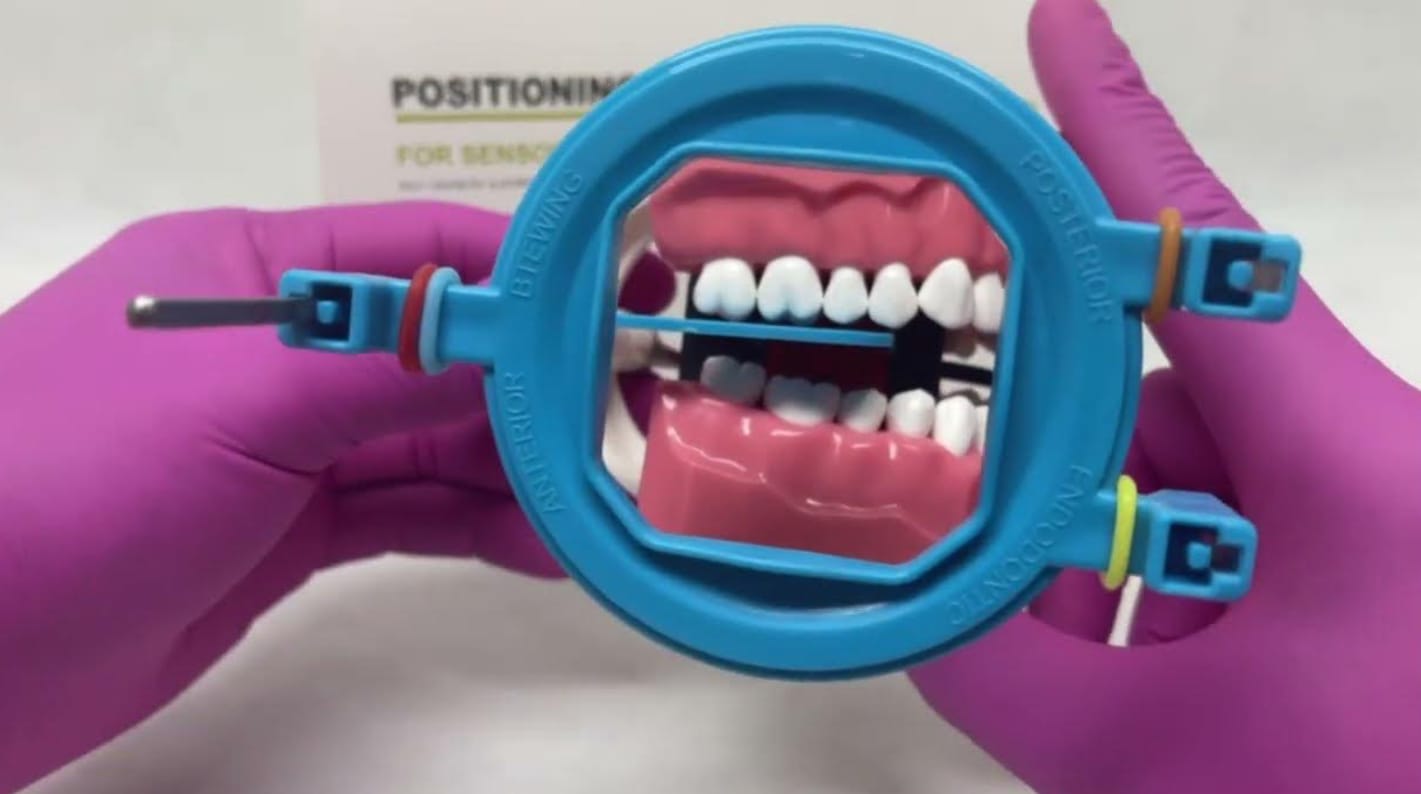
The XCP device consists of a collimator ring parallel to the plane of the radiographic film holder and the intraoral bite block or plate holder. To obtain a perfect image in radiology, a perpendicular angle between the X-ray beam and the film is necessary. If this is not achieved, elongated and distorted images are obtained, which can lead to incorrect diagnoses or the need to repeat the radiograph.
Intraoral dental radiography presents the challenge of the difficult positioning of the radiographic film in the patient's mouth, in addition to requiring the patient to hold the film themselves, often leading to erroneous results.
The XCP aids in proper positioning, easily aligning the plane of the intraoral X-ray film parallel to the cross-sectional plane of the X-ray beam, and also to the sectioned images, since the extraoral collimator ring marks the film's boundary.
The XCP consists of 3 parts:
- The collimating ring
- The bite block
- The metal connecting arm between these
Despite being a system with few parts, its assembly and use can be confusing, given the multiple options and arrangements depending on the quadrant, colors, and treatment to be performed.
XCP Classification
XCPs are classified by color according to their location and the treatment to be performed:
- The Blue XCP is designed for taking periapical radiographs in the anterior
- The Yellow XCP is designed for taking periapical radiographs in the posterior
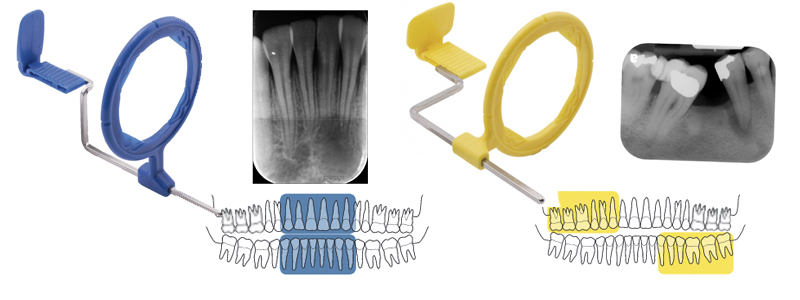
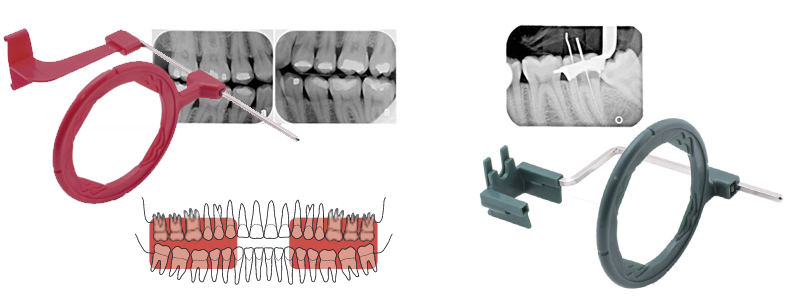
- The XCP Red is designed for taking bitewing radiographs, also called bitewing radiographs, a special type of radiograph of the posterior teeth, where both arches are recorded in occlusion. It is one of the best tools for diagnosing interproximal caries.
- The XCP Green is designed for taking endodontic radiographs, where a special setup is needed to ensure the image shows the entire tooth, including the root and apex, allowing for the diagnosis of diseases and visualization of the files within the root canal.
Check out the best-selling X-ray positioners:
XCP Mounting for Intraoral Radiography
There are many options and brands on the market, but as a general rule, before buying a positioner, you should know that XCP is compatible with the X-ray system used in your dental clinic. The first XCP was designed to hold manually developed film, but the advancement has been remarkable, and today they have evolved to adapt to modern digital radiography sensors that reduce exposure and development time.
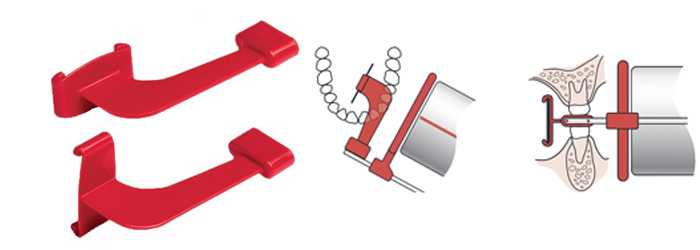
Furthermore, within each color variety, we can find different bite blocks depending on the size of the intraoral film and whether a vertical or horizontal radiograph is desired. The following image shows the difference between these two types:
Positioning Errors in Radiology
Using the XCP requires a simple but necessary learning curve. A little trick to know if it has been mounted backwards is that the film should always be centered through the circle, and the film holder should be at the end so that it faces the lingual or inner surface of the patient.
To take anterior periapical radiographs (Blue XCP) in each arch, simply turn it over for the upper or lower arch. However, to take posterior periapical radiographs (Yellow XCP), mounting can be more difficult.
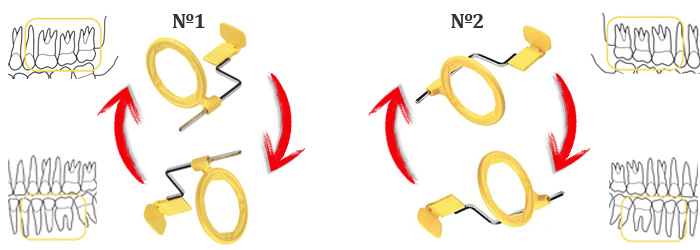
There are two configurations that allow imaging of all four hemiarches by reversing the position of the plate:
- Image 1: XCP setup for taking a radiograph of the right maxilla (First quadrant) and turning it around for the left mandible (Third quadrant)
- Image 2: XCP setup for taking a radiograph of the left maxilla (Second quadrant) and turning it around for the right mandible (Fourth quadrant)
At Dentaltix, we have a wide catalog of XCP positioners from different brands, as well as all the dental radiology instruments and accessories you need. We hope you enjoyed our article. Follow us on our social media channels to stay up-to-date on the latest news in the dental sector. Until next time!