In restorative dentistry, professionals must consider multiple factors that directly influence the choice of the most appropriate treatment. The nature of the required restoration, the patient's oral health history, and the quality of their hygiene habits are elements that condition both the clinical approach and the selection of the material. Added to this is the need to balance strength and durability with aesthetic expectations, a crucial aspect in virtually any modern restoration.
Flowable composites have become established as a particularly valuable option. Their design and behavior differentiate them from conventional restoratives, offering properties that allow for the effective treatment of common clinical situations such as caries or fractures. Furthermore, the development of modern formulations has significantly improved their handling and application, expanding their possibilities within the restorative workflow.
Therefore, understanding how flowable composites are designed and recognizing the advances that have optimized their use is fundamental for successfully integrating them into clinical practice. These materials not only represent an effective alternative, but also a tool that provides flexibility and reliability in an environment where every decision influences the final outcome of the treatment.
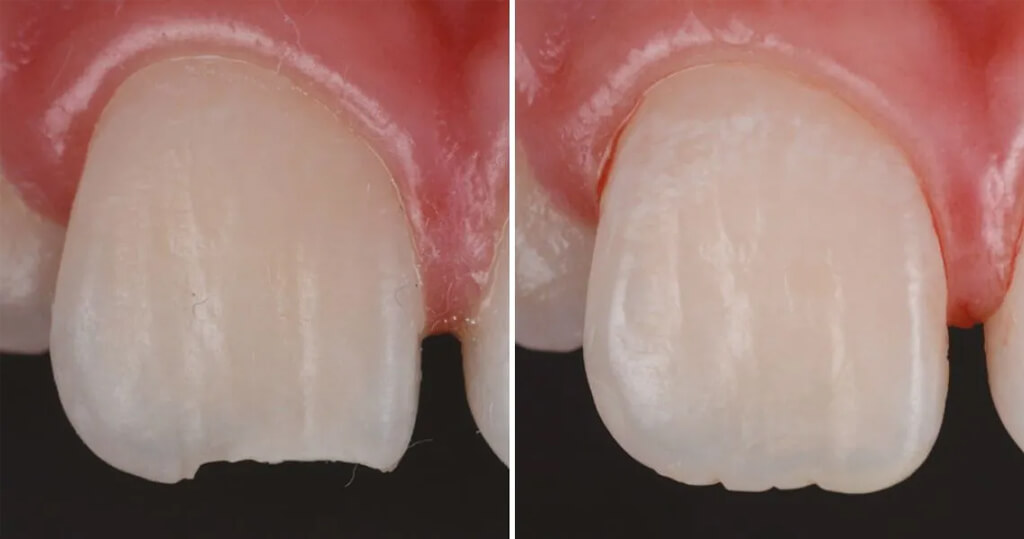
Unique Properties of Flowable Composites
Resin-based flowable composites are characterized by a lower filler load and the use of less viscous monomers, which gives them their fluid consistency and facilitates their adaptation to hard-to-reach cavities. Although they can be used as a complement to conventional composites, many current formulations have demonstrated clinical results comparable to traditional restorative materials. This allows, in appropriate cases, the use of flowable composites to perform full-mouth restorations without compromising quality.
Generally, the filler content in restorative composites ranges from 37% to 53%, and the difference between products lies primarily in the amount of inorganic filler incorporated. Particle size is usually stable across different formulations; however, not all flowable composites are the same. Each product may include inorganic fillers with variations in type, size, and geometry, characteristics that directly influence their clinical properties. These differences allow the practitioner to select the flowable composite that best suits their therapeutic objectives or working preferences.
One of the key parameters associated with these variations is compressive strength, which is fundamental for the durability of the restoration. Although it is usually related to the amount of inorganic filler, it is also affected by the type, size, and geometry of the particles present. Therefore, choosing the right flowable composite can significantly influence the material's performance over time.
How to Avoid Voids in Restorations
The final quality of a composite restoration depends on both the material chosen and the skill with which it is applied. One of the problems that can compromise the result is internal voids, small pockets of air that become trapped inside the composite during placement. These defects usually appear when the application technique is not adequate, generating an uneven distribution of the material or allowing air to enter during extrusion.
While very small voids rarely pose a clinical problem, they can appear as unaesthetic images on radiographs. Larger voids, however, do represent a risk: they can promote cracking under functional load, reduce the strength and durability of the restoration, and even cause microleakage and discoloration at the margins. When this occurs, treatment may require more invasive corrections or even complete replacement of the restoration.
Modern Advances in Flowable Composites
To minimize these complications, current generations of flowable composites have incorporated specific improvements in their dispensing systems. Redesigned syringes allow for more precise access to the cavity, reduce the possibility of errors during application, and facilitate the evacuation of trapped air before the material comes into contact with the tooth. This helps prevent bubble formation and promotes more uniform placement.
A good example of this advancement is Filtek Supreme Fluid from Solventum (3M Health Care). Thanks to its optimized syringe, which includes a redesigned nozzle and a plunger with vents, residual air can be released in a controlled manner during extrusion. In this way, the composite is deposited virtually without bubbles and adapts precisely to the cavity surfaces. Furthermore, it offers excellent polish retention, wear resistance, and a natural finish, contributing to durable and aesthetically stable restorations.
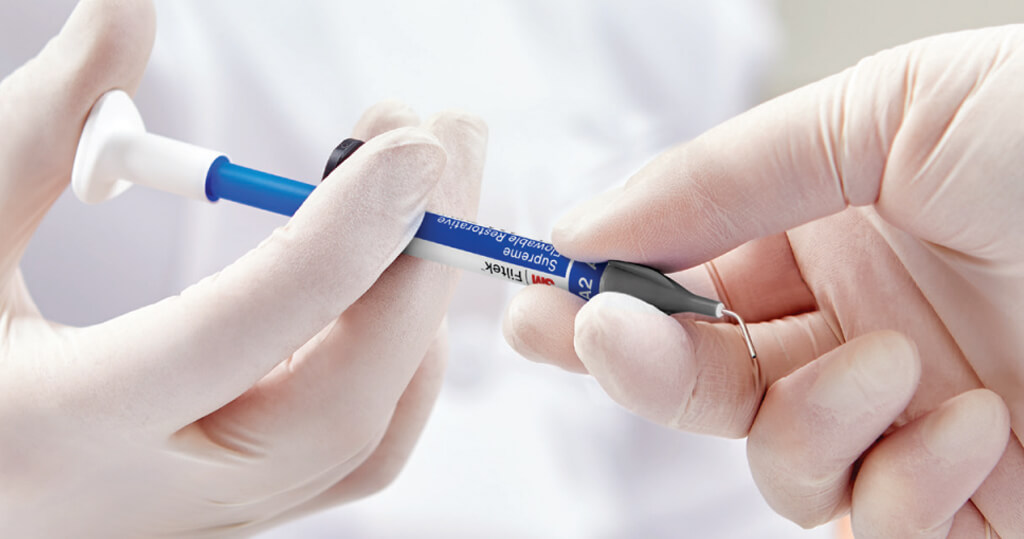
Flowable composites represent an effective restorative option thanks to their particular composition and their ability to precisely adapt to the cavity. However, their final performance depends not only on the material; the clinical technique and the quality of the dispensing system are crucial to avoid voids, ensure good adaptation, and guarantee the durability of the treatment.
Advances in syringe design facilitate a more controlled and virtually bubble-free application, improving the predictability of the procedure. Combining a suitable flowable composite with careful application allows the professional to achieve aesthetic, resistant, and long-term stable restorations.
That's all for today's article! We hope you found it helpful, and if you liked it, please feel free to share it. Follow us on our social media channels to stay up-to-date on all the latest news in the dental sector and our special offers. See you soon!